

ULTRASONIC CLEANER BUYING GUIDE
Choosing an ultrasonic cleaner starts with what you need to clean. The right machine should fit your parts, suit their materials and make your cleaning routine manageable.
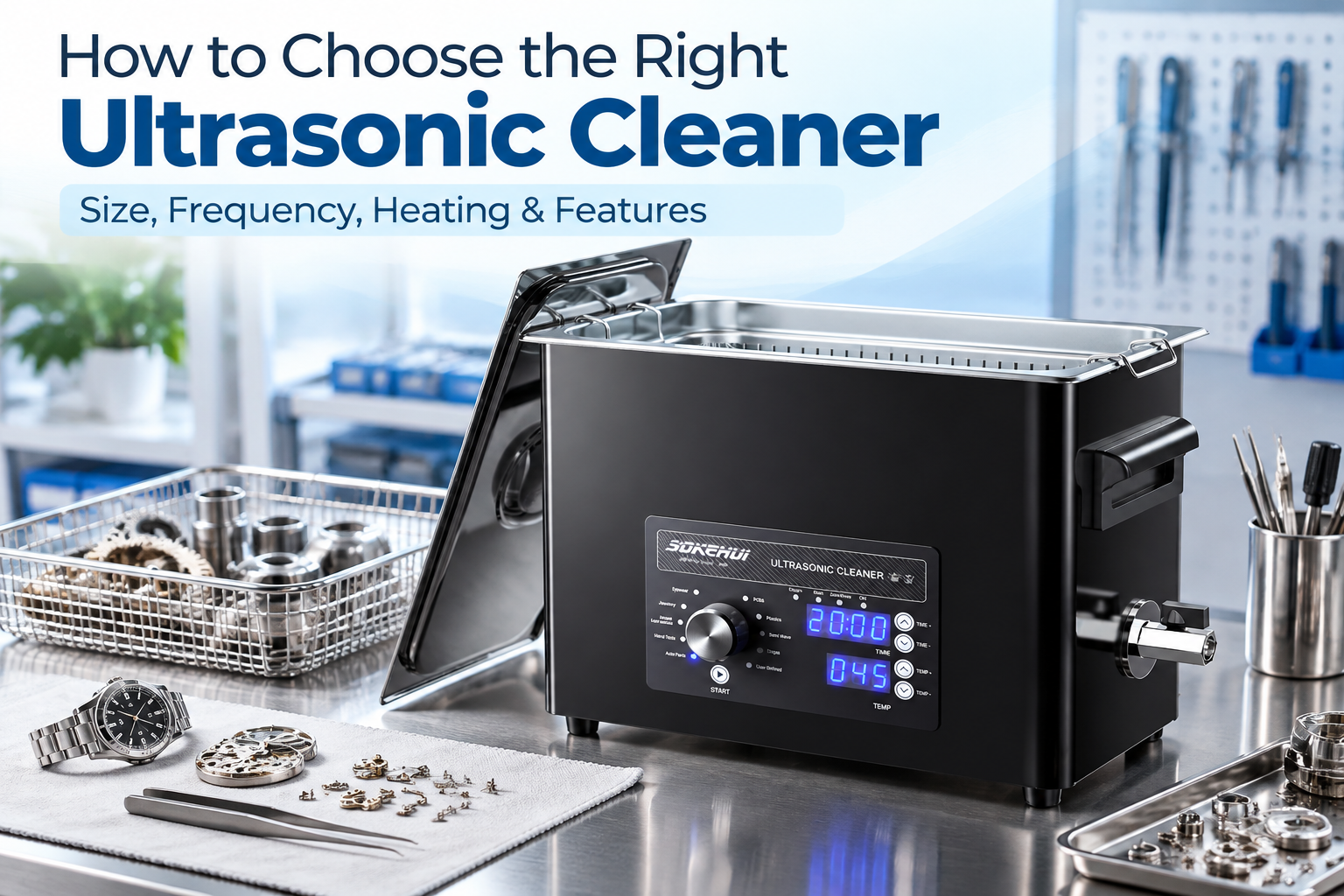
How do you choose the right ultrasonic cleaner?
Start with usable basket dimensions and your normal batch size. Then match ultrasonic frequency and cleaning solution to the material and contamination. Finally, compare temperature control, timer settings, handling and maintenance needs. Confirm these details for the exact model before ordering.
In this guide
1. Choose tank capacity around your parts
A tank's stated volume is only a starting point. Ask for the internal tank dimensions, usable basket dimensions and recommended working liquid level. Your largest item needs to fit in its intended cleaning position, with room for the cleaning liquid to reach the surfaces.
- Measure the largest part: include handles, protrusions and any fixture needed to hold it.
- Plan a realistic batch: consider how many items you normally clean together, rather than assuming the basket can be packed tightly.
- Check the working depth: confirm the basket and liquid level allow the required immersion.
- Measure the workspace: allow room for loading, lifting the basket and transferring wet parts.
For example, a long component may need a different tank shape from a batch of small parts, even if both seem to require a similar liquid volume. Send the supplier your part dimensions and a photo of the intended load before choosing a model.
2. Match frequency to the cleaning task
Ultrasonic cleaning uses cavitation in a liquid to help remove contamination. Frequency affects that cleaning action: lower frequencies generally provide more vigorous action, while higher frequencies are often considered for finer cleaning and sensitive surfaces. Material, geometry and contamination must guide the choice. See Elma's explanation of ultrasonic cleaning and frequency.
Ask a supplier to recommend a frequency for your actual parts. Describe the base material, coatings, joints and residue you want to remove. A higher frequency is not automatically the best choice for every job, and frequency alone does not guarantee compatibility.
Questions to ask before choosing a frequency
- Has this cleaning process been evaluated on similar materials and finishes?
- Can a representative sample be tested before purchase?
- Is the frequency fixed or selectable on the specific model?
- What cleaning solution, temperature and cycle are recommended for the test?
3. Consider heating together with cleaning chemistry
Cleaning solution, temperature, time and ultrasonic action work together. Select a solution that is compatible with both the contamination and the part material, then follow its specified temperature and concentration guidance. These process factors are also discussed in Elma's ultrasonic cleaning overview.
If your process calls for a controlled temperature, check how the model sets and displays temperature, and whether the heater can be controlled separately from the ultrasonic cycle. Ask how temperature is monitored during operation, especially when cleaning temperature-sensitive components.
Before buying, request the operating manual and cleaning-solution compatibility guidance. Do not choose a machine solely because it offers a high maximum temperature; choose one that supports the conditions your parts require.
4. Look for controls and features you will use
A useful feature makes your real workflow easier to run or repeat. Treat the following as a comparison checklist, and verify availability on each product page or with the supplier.
Timer and display
Check the selectable cycle range, how remaining time is shown and what happens when a cycle ends. Make sure operators can read and adjust the controls comfortably.
Basket and handling
Confirm what is included, the permitted basket load and how parts will be supported. Check that accessories fit your smallest items as well as your largest part.
Drainage and upkeep
Ask how the tank is emptied and cleaned, what routine care is required and which replacement accessories are available. Include these tasks in your workspace plan.
Also ask about electrical requirements, permitted operating cycles, warranty terms and service support. If two listings show different power figures, confirm what each figure measures before comparing them.
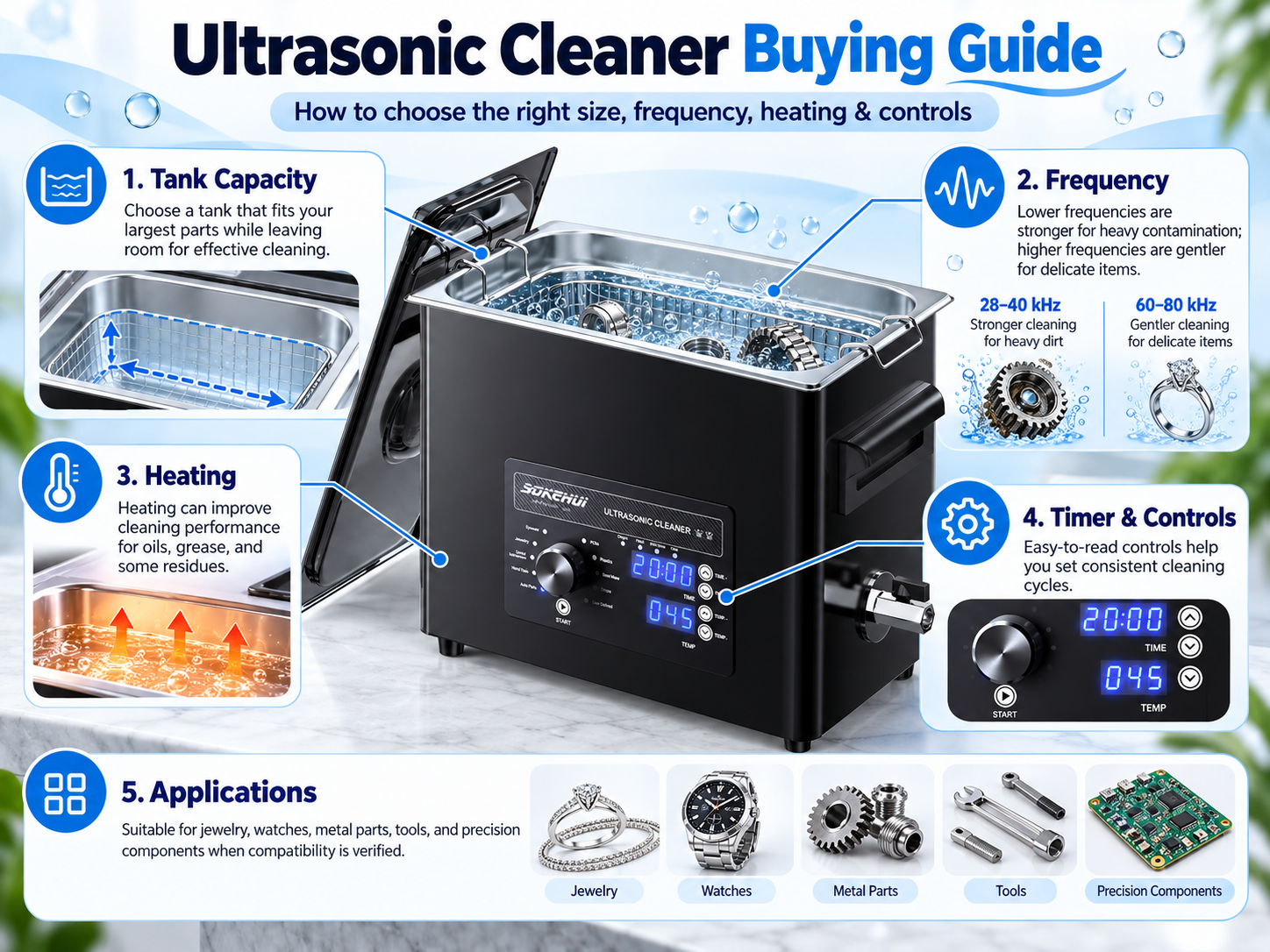
Use these five factors to build a shortlist, then check the specifications of each individual model.
5. Define your application and workflow
Write a short cleaning brief before comparing machines. It gives the supplier more useful information than a tank capacity alone.
- Workshop components: list the metals, surface finishes, residue and part dimensions. Ask about loading arrangements for irregular shapes.
- Jewelry or small detailed items: identify every material, stone, coating and bonded component. Request compatibility guidance for the complete item.
- Laboratory or precision parts: define the required cleanliness, acceptable residues and any inspection or documentation requirements.
- Repeated batches: record batches per day and include loading, solution changes, rinsing, drying and inspection in the workflow.
These are questions for selecting a process, not a claim that every ultrasonic cleaner suits every application. Ask for a representative cleaning trial and agree on how you will evaluate the result.
Explore our ultrasonic cleaner collections
Browse the Standard, Economical and Premium collections to find models to compare. Collection names are a starting point; confirm dimensions, frequency, controls and included accessories for the model you select.
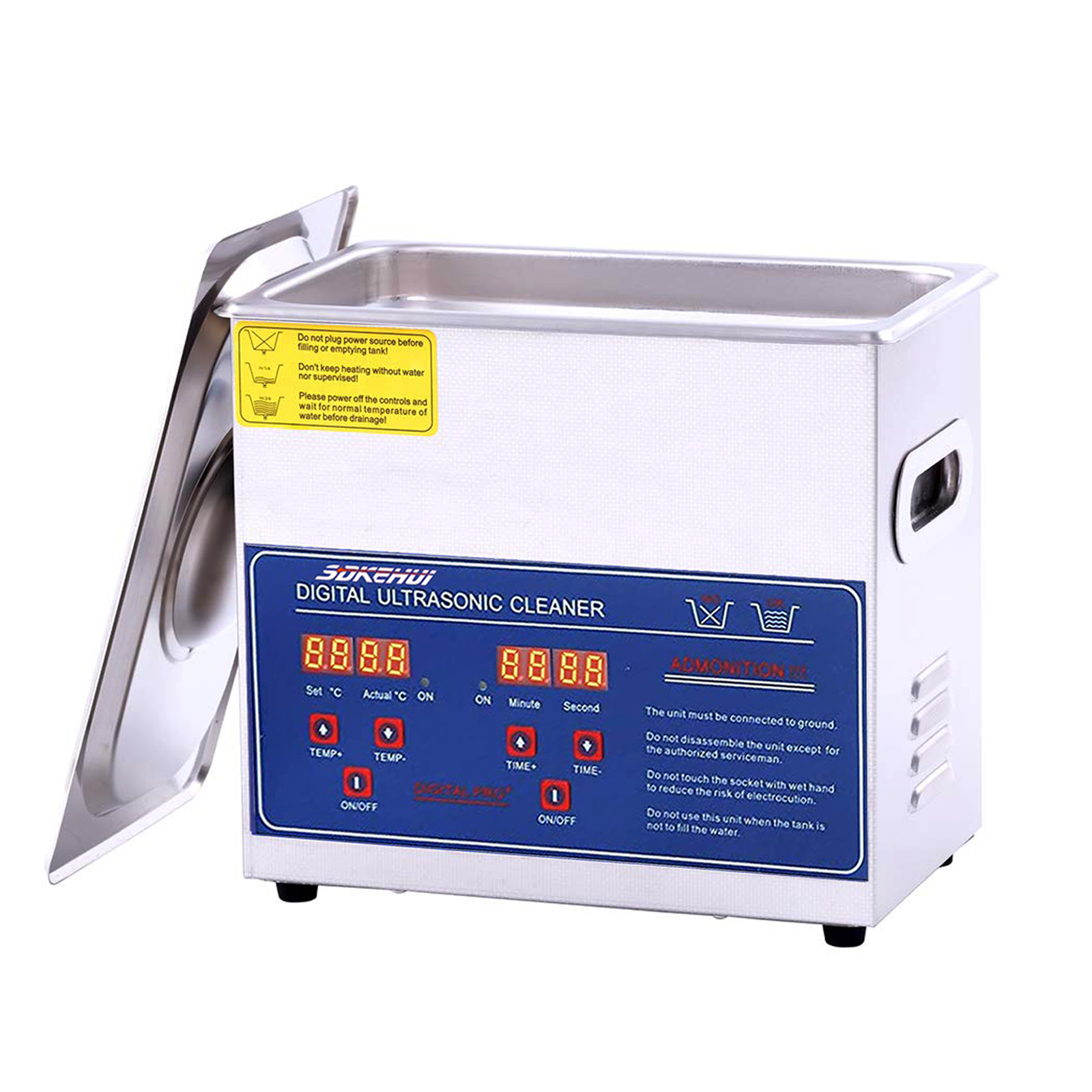
Standard
Review the Standard collection and compare individual models against your cleaning checklist.
Explore Standard →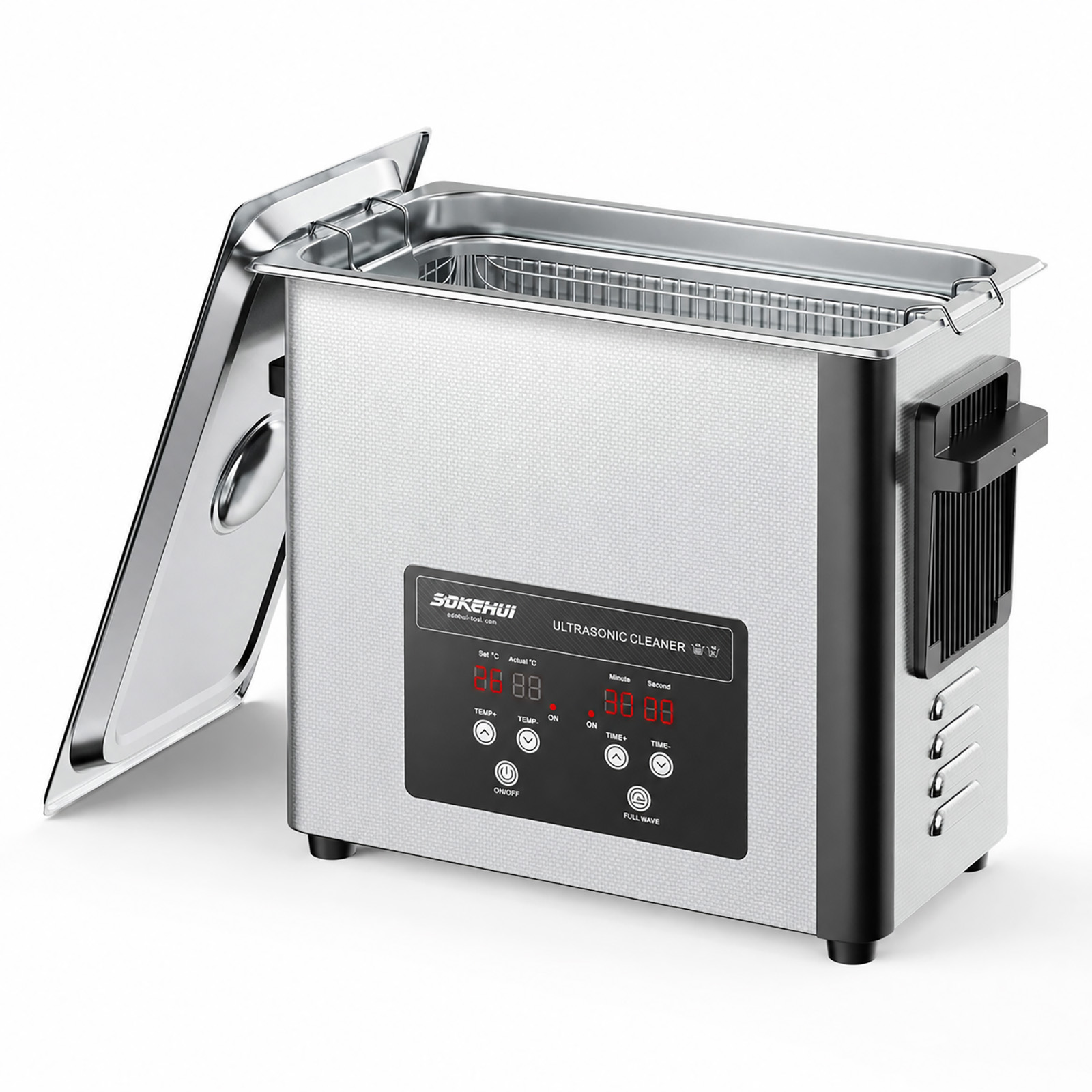
Economical
Review the Economical collection and check which listed models meet your essential requirements.
Explore Economical →
Premium
Review the Premium collection and verify the features offered by each model on your shortlist.
Explore Premium →Before-you-buy checklist
Keep these details beside you when comparing product pages or requesting a recommendation:
- Largest part dimensions, material, finish and weight.
- Typical batch quantity and frequency of use.
- Type of contamination and the result you need.
- Usable basket size and working liquid depth.
- Recommended frequency, solution and temperature.
- Timer settings, handling needs and included accessories.
- Available workspace and electrical supply.
- Operating limits, maintenance, warranty and support.
Frequently asked questions
What size ultrasonic cleaner do I need?
Choose by the dimensions of your largest part and normal batch. Confirm the usable basket size and working liquid depth with the supplier. Tank volume alone does not tell you whether a part will fit correctly.
Is a higher ultrasonic frequency always better?
No. Frequency should suit the material, surface finish and contamination. Ask for an application-specific recommendation and a sample test where compatibility or finish quality is critical.
Do I need an ultrasonic cleaner with heating?
Choose heating when your approved cleaning process requires temperature control. Check the cleaning solution's instructions and the part's temperature limits before selecting a model or setting.
How long should an ultrasonic cleaning cycle be?
There is no single cycle time for every item. Follow the equipment and solution guidance, test a representative part and inspect the result. Record a suitable cycle for each type of load instead of assuming a longer cycle is better.
Can I use one cleaner for different materials?
Possibly, but each material and finish needs a compatible process. Confirm solution compatibility, loading arrangements and operating conditions for each application before using the same machine across different jobs.
How should I compare Standard, Economical and Premium models?
Use the same checklist for every model. Compare published specifications, included accessories and support terms. Do not assume a collection name establishes a particular capacity, frequency or cleaning result.
Find the right fit for your cleaning task
Start with your parts and your process, then shortlist models that meet those requirements. Explore our collections and use this guide to compare the details that matter to you.
Shop Standard Shop Economical Shop Premium