

How ultrasonic cleaning works, where it helps, and what to look for when choosing a machine for your workshop or business.
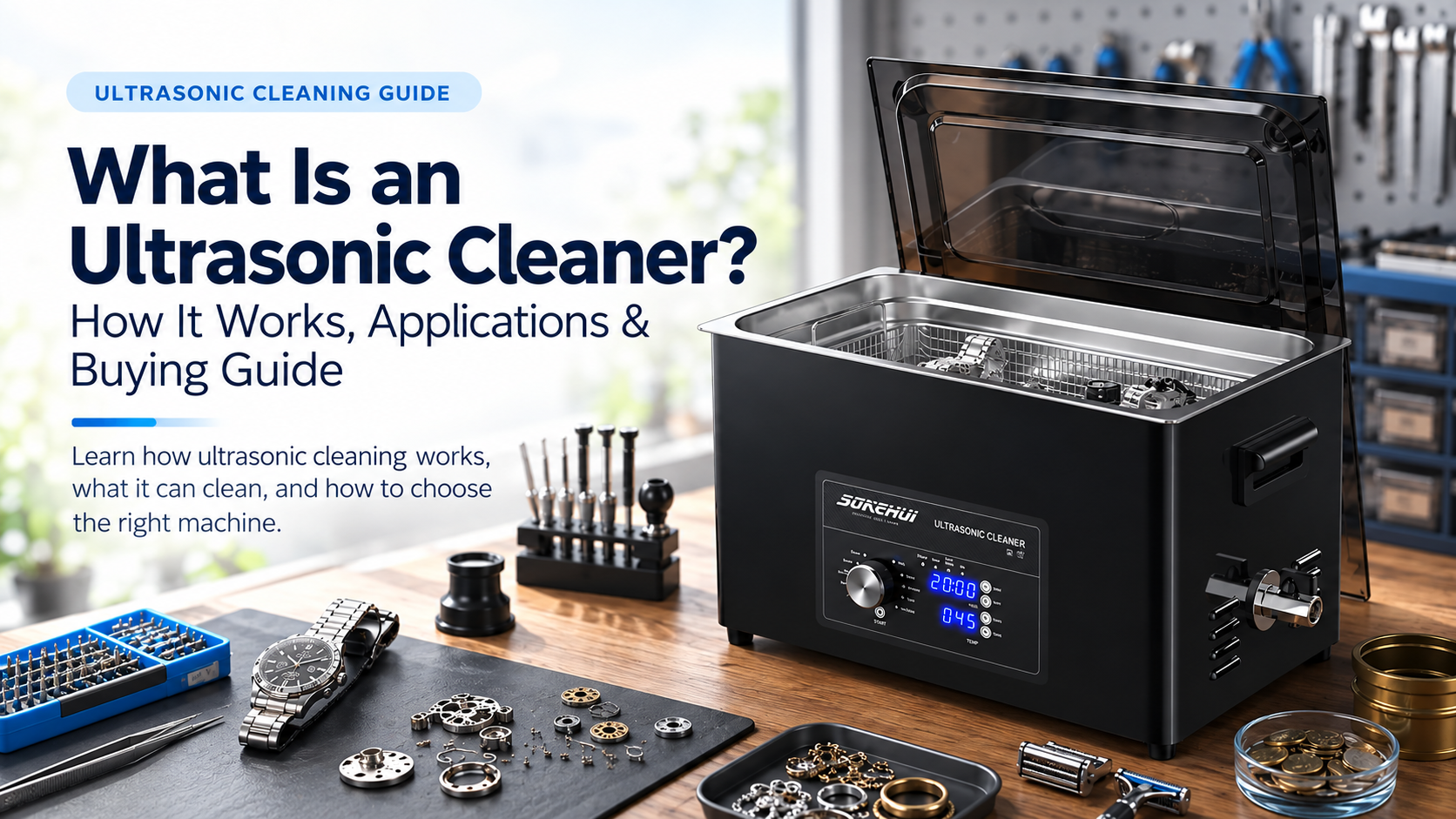
Ultrasonic cleaners help remove dirt, oils, grease, and residue from many compatible objects. From watch workshops to industrial maintenance, they offer a useful way to clean intricate parts. This guide explains the process and helps you choose equipment with confidence.
What Is an Ultrasonic Cleaner?
An ultrasonic cleaner is a machine that transmits high-frequency sound waves through a liquid bath to help remove contamination from objects placed inside it. When properly configured, this process reaches grooves, holes, and complex surfaces that can be difficult to clean by hand.
Cleaning performance depends on the item, tank size, ultrasonic frequency, cleaning solution, temperature, and cycle time. Some delicate materials and finishes are not suitable for ultrasonic cleaning.
How Does Ultrasonic Cleaning Work?
The cleaning action is driven by cavitation. Ultrasonic waves generate tiny bubbles within the cleaning liquid. When these bubbles collapse, they create localized action that helps dislodge contaminants from accessible surfaces.
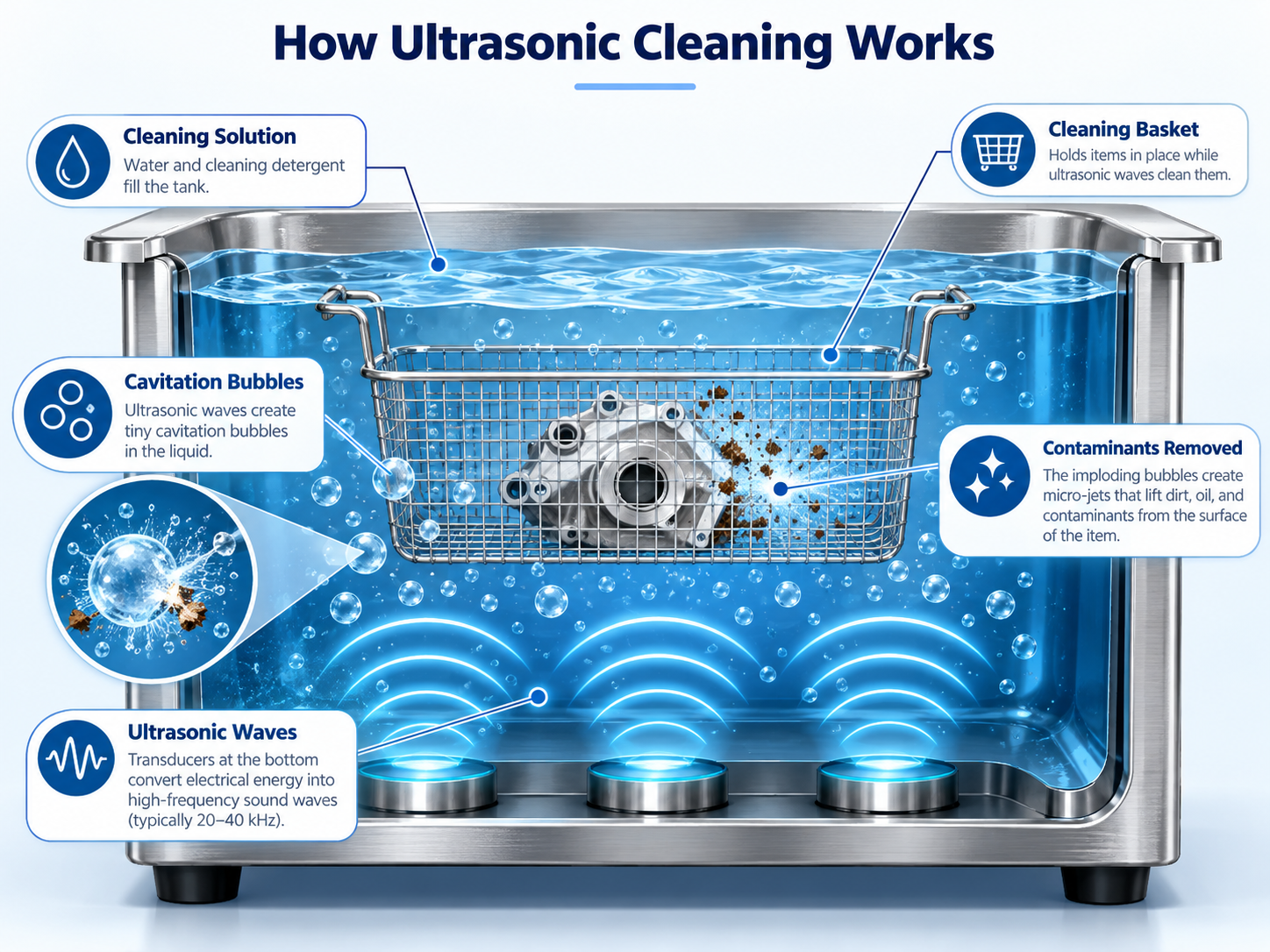
Typical Cleaning Process
- Fill: Add the appropriate liquid to the recommended level.
- Load: Put compatible parts into a cleaning basket rather than directly on the tank base, unless the manufacturer permits otherwise.
- Set: Choose the cleaning time and, if available, the appropriate temperature.
- Clean: Run the cycle according to the equipment instructions.
- Finish: Rinse and dry the items as required by the cleaning process.
Benefits and Common Uses
Helps clean complex shapes and hard-to-reach areas without relying entirely on manual scrubbing.
Adjustable timers and temperature controls can make cleaning procedures easier to standardize.
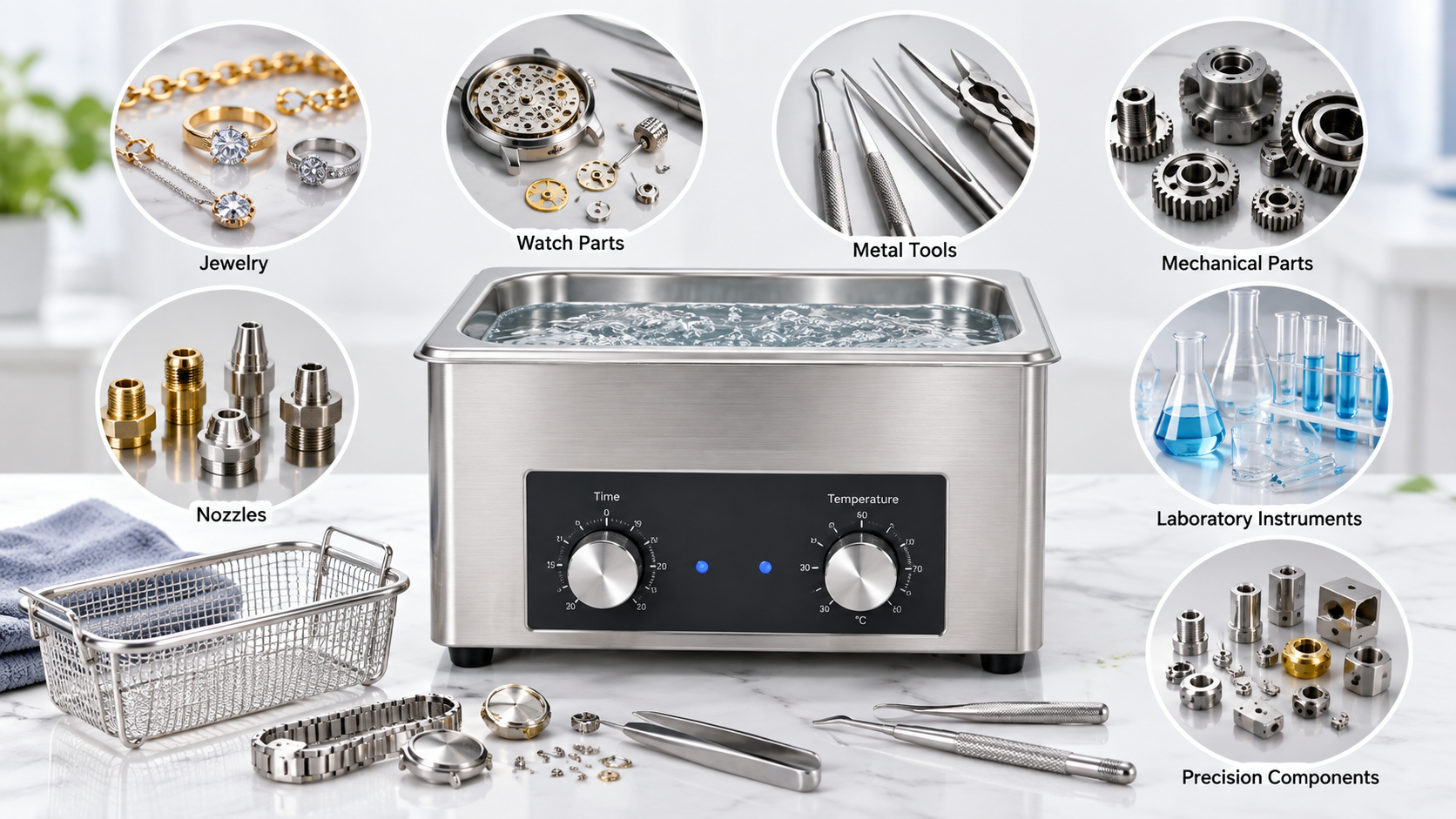
Suitable for many compatible jewelry pieces, mechanical components, tools, and industrial parts.
Common applications include jewelry cleaning, automotive components, machining residue removal, laboratory equipment, and precision parts. Suitability always depends on the materials and assembly involved.
How to Choose the Right Ultrasonic Cleaner
1. Tank Size and Capacity
Measure the parts you need to clean and compare those dimensions with the tank's usable internal space. A larger nominal capacity does not automatically mean a particular item will fit.
2. Frequency and Cleaning Intensity
Lower frequencies typically create more aggressive cavitation, while higher frequencies may be preferable for more delicate tasks. Use the frequency and settings recommended for your materials and process.
3. Heater, Timer, and Controls
Consider whether you need a heater, adjustable timer, and easy-to-read controls. Heating can help with some soils and solutions, but not every application requires it.
4. Cleaning Chemistry and Compatibility
Select a cleaning solution suitable for both the contaminants and the parts being cleaned. Always check chemical safety information and equipment specifications.
5. Workload and Maintenance
For frequent cleaning, consider tank construction, basket availability, drainage, maintenance access, and the machine's recommended operating duty cycle.
Explore Ultrasonic Cleaner Options
Compare our three ultrasonic cleaner collections to find the right starting point. Check individual product specifications for tank size, heating, controls, and your intended use.
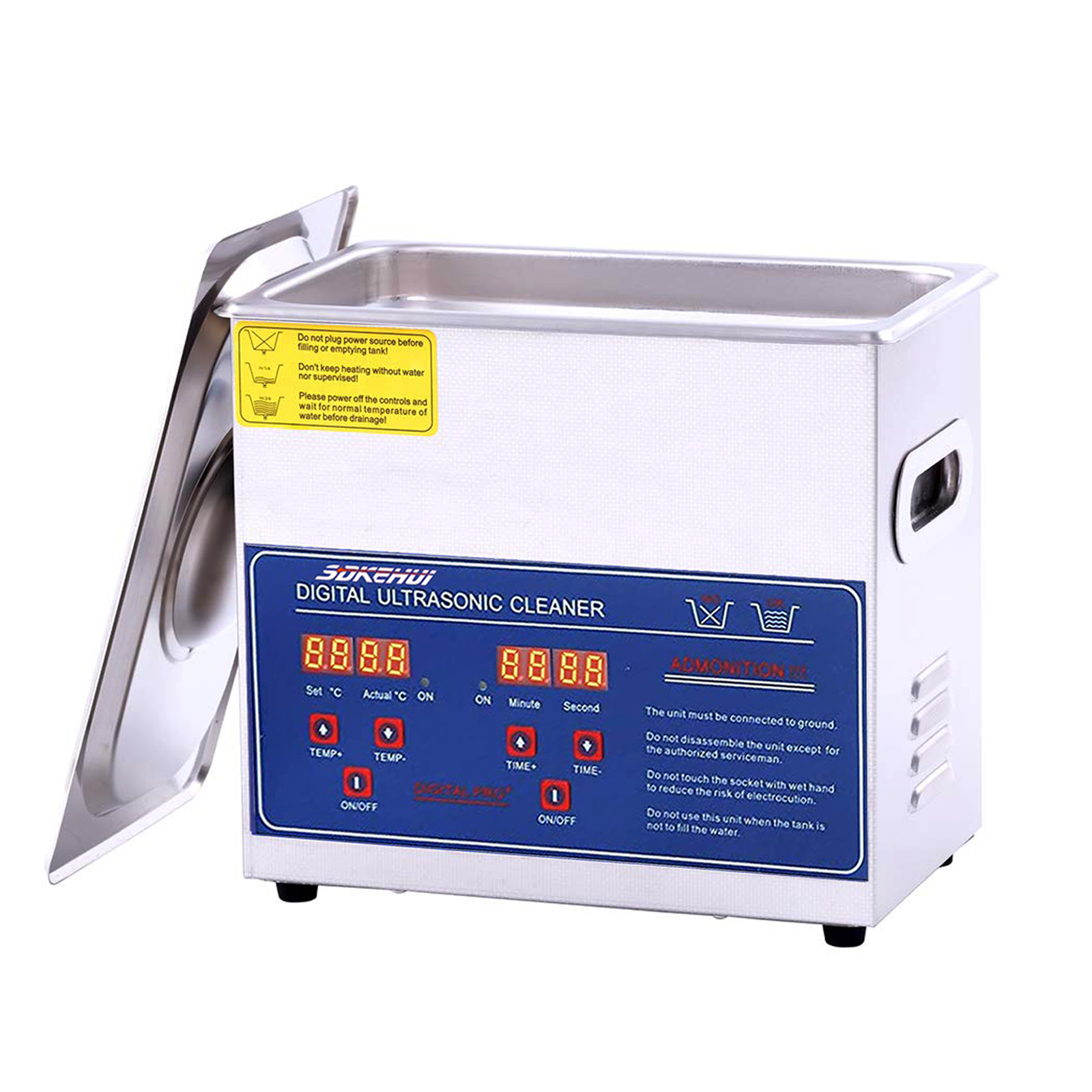
Bench Ultrasonic Cleaners
Explore versatile machines for a range of general cleaning needs.
View Bench Models →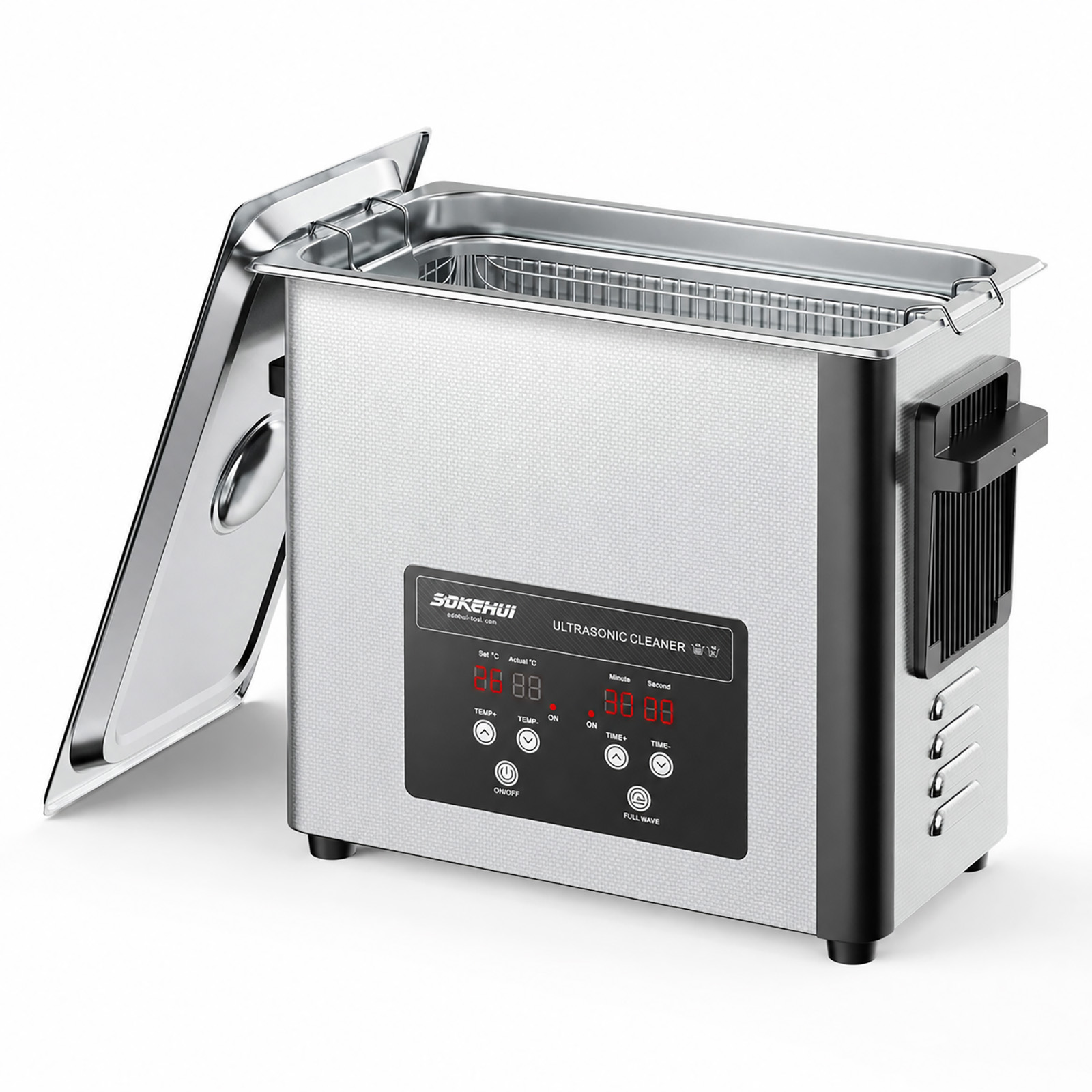
Value Ultrasonic Cleaners
Compare accessible options for everyday cleaning requirements.
View Value Models →
Workshop Ultrasonic Cleaners
Explore the Workshop collection and compare features for your requirements.
Explore Workshop Models →Ultrasonic Cleaning Safety Tips
- Follow the manufacturer's filling, loading, operating, and maintenance instructions.
- Do not use flammable solvents unless the complete equipment and process are specifically designed and approved for them.
- Do not place your hands into the tank during ultrasonic operation.
- Verify that your items, coatings, gemstones, and assemblies are compatible with ultrasonic cleaning.
- Follow chemical handling, rinsing, drying, and disposal guidance.
Frequently Asked Questions
Can ultrasonic cleaners remove oil and grease?
Yes, for many suitable parts. Results depend on the cleaning solution, temperature, contamination, and cycle settings.
Can I use plain water?
Water can transmit ultrasonic energy, but a compatible detergent or cleaning solution is often needed to remove particular contaminants effectively.
How long should a cleaning cycle last?
There is no universal cycle time. Follow the machine and chemical instructions and validate the process on compatible items.
Are ultrasonic cleaners safe for all materials?
No. Certain gemstones, coatings, adhesives, sensitive components, and delicate assemblies may be damaged. Check compatibility first.
Find the Right Ultrasonic Cleaner
Ready to compare machines? Browse the SDKE HUI TECH collections and review the specifications that matter for your cleaning application.
Educational content only. Follow your specific machine manual and chemical instructions. Product images in this guide may be illustrative.