

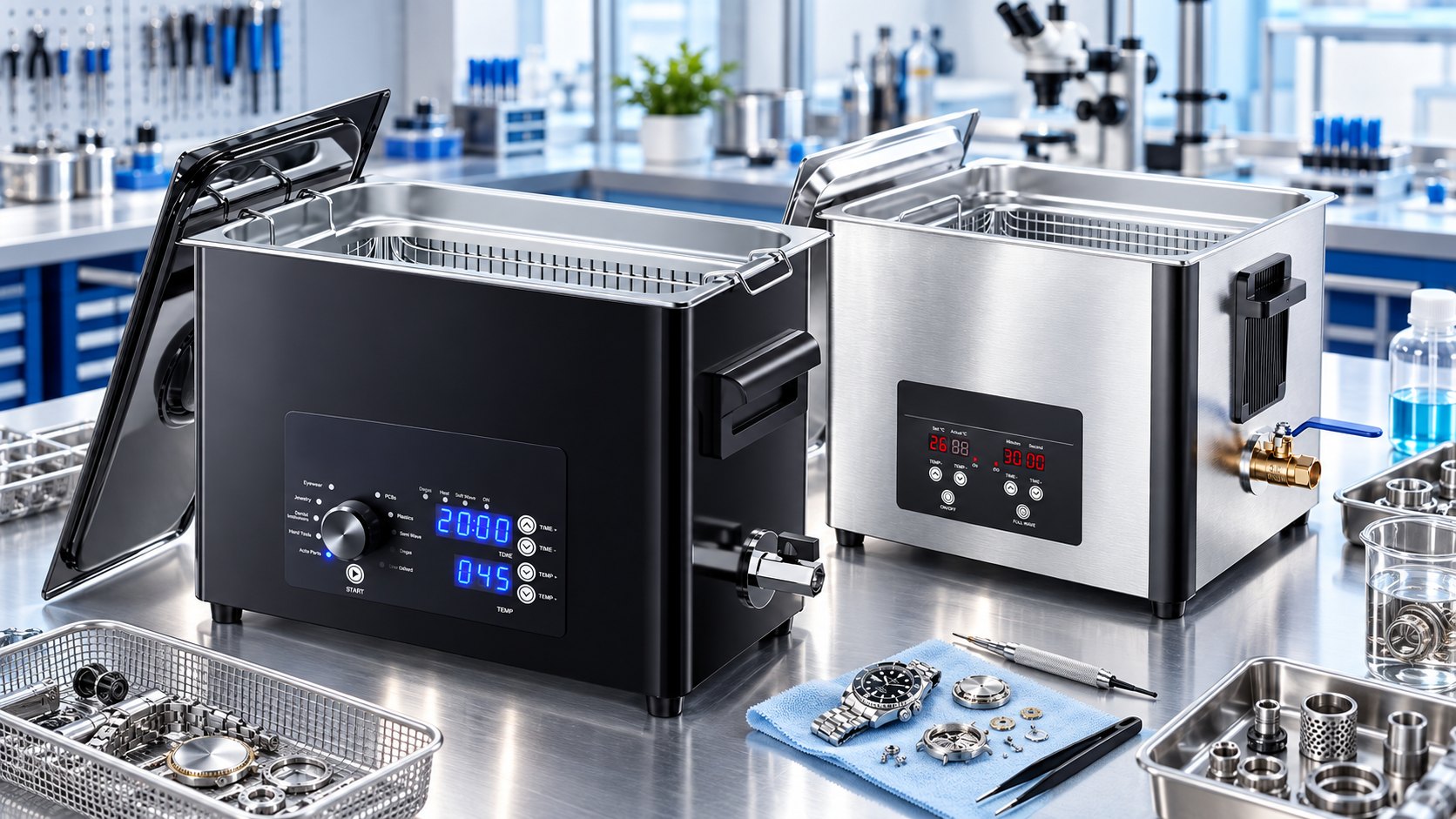
Ultrasonic Cleaning Applications
What Can You Clean with an Ultrasonic Cleaner? 10 Practical Applications
From jewelry and watches to workshop tools, automotive components, and precision parts, ultrasonic cleaning can be a practical way to reach dirt and residue in complex areas that are difficult to clean manually.
What Can You Clean with an Ultrasonic Cleaner?
Ultrasonic cleaners can be useful for many hard, non-porous items with grooves, openings, threads, recesses, and other surfaces that are difficult to reach with a brush or cloth.
Instead of relying only on mechanical scrubbing, ultrasonic cleaning uses high-frequency sound waves in a liquid bath to create microscopic cavitation bubbles. The movement and collapse of these bubbles helps loosen contaminants from submerged surfaces.
The process is not suitable for every object. Material compatibility, coatings, adhesives, seals, electronics, cleaning chemistry, temperature, and the manufacturer's instructions should be considered before cleaning.

10 Practical Ultrasonic Cleaner Applications
1. Jewelry
Suitable metal jewelry can collect oils, dirt, and residue around settings, links, grooves, and other small areas. An ultrasonic cleaner can help the cleaning solution reach these hard-to-access surfaces.
Common examples: rings, metal bracelets, chains, pendants, and compatible metal components.
Important: not every gemstone or jewelry construction is suitable for ultrasonic cleaning. Check the jeweler's or manufacturer's guidance before cleaning valuable or delicate pieces.
2. Watches and Watch Components
Watch bracelets and certain removable metal components can have dirt trapped around links and joints. Ultrasonic cleaning may be appropriate for compatible parts, but a complete watch should not automatically be placed in an ultrasonic cleaner.
Water resistance, seals, movement components, crystals, coatings, and other sensitive parts must be considered first.

3. Automotive Parts
Suitable automotive and mechanical components can accumulate oil, grease, carbon deposits, and other contaminants in recessed areas. Ultrasonic cleaning can help reach complex surfaces that are difficult to scrub manually.
Possible applications: suitable carburetor components, fuel-system parts, gears, bearings, metal hardware, and other compatible mechanical parts.
4. Workshop Tools
Metal tools can collect grease, dust, polishing residue, and other contamination around threads, grooves, joints, and small openings. For suitable tools, ultrasonic cleaning can be a convenient addition to a workshop cleaning routine.
5. Precision Metal Parts
Machined components, fasteners, small gears, fittings, and other compatible metal parts can benefit from a cleaning process that surrounds the part with liquid. This is particularly useful when contaminants are located in narrow or recessed areas.
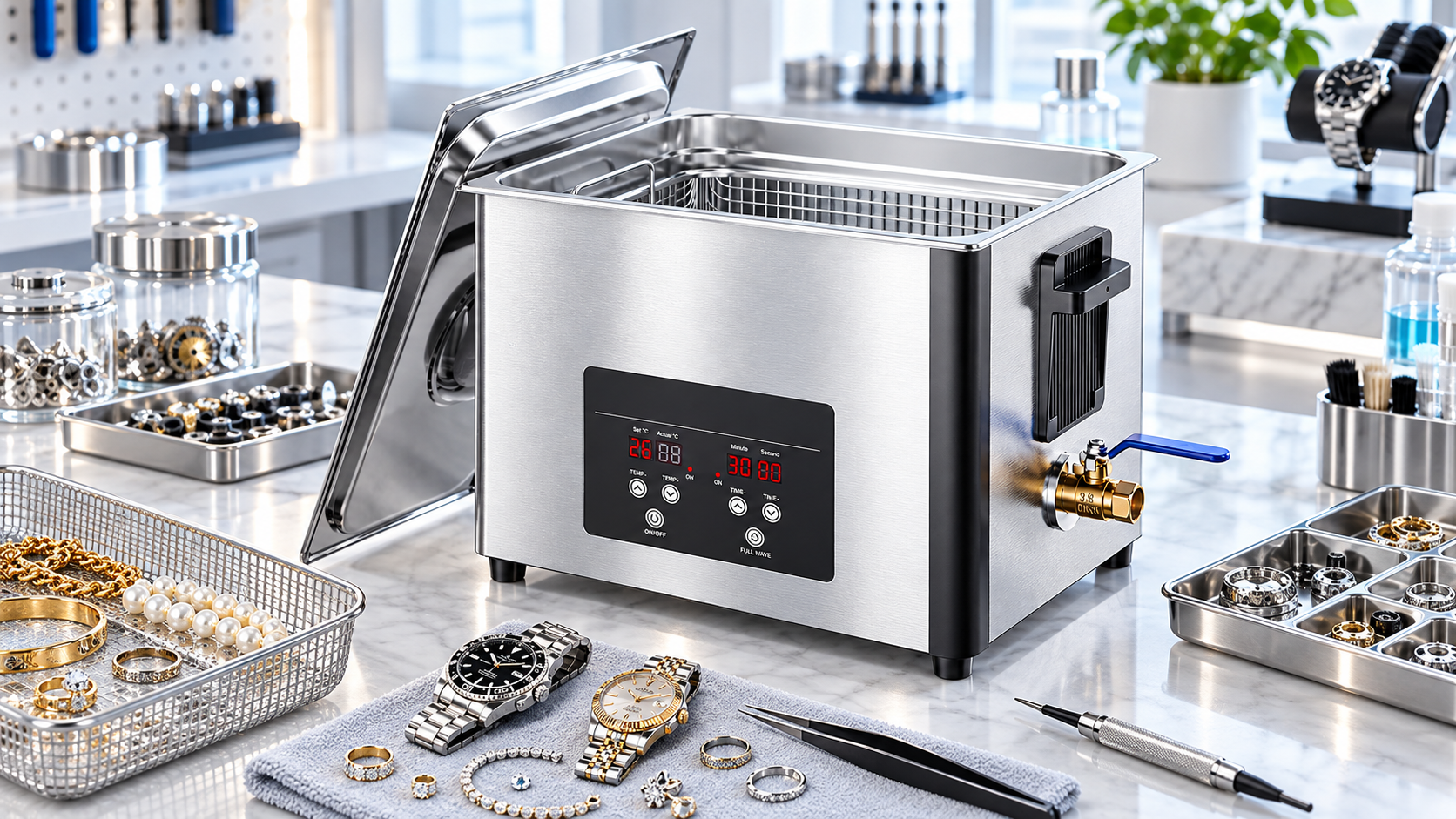
6. Laboratory and Technical Equipment
Appropriate laboratory glassware, metal components, tools, and technical parts may be cleaned ultrasonically when the materials and cleaning procedure are compatible. Professional applications should follow the equipment manufacturer's instructions and applicable workplace procedures.
7. Suitable Optical and Small Components
Some small components with complex surfaces can be difficult to clean manually. Ultrasonic cleaning may be appropriate when the component material and any optical coating or surface treatment are confirmed compatible.
Always check coatings first. A process suitable for bare metal may not be suitable for a coated surface.
8. Coins and Collectibles
Some metal collectibles may be cleaned ultrasonically, but collectors should be cautious. Cleaning can change surface appearance, finish, patina, or collectible value. For valuable items, professional advice is recommended before cleaning.
9. Small Electronic and Technical Components
Some technical components may be cleaned ultrasonically under controlled conditions, but electronics require special care. Moisture, cleaning chemistry, trapped liquid, connectors, coatings, and sensitive assemblies can create risks.
Never assume that an electronic device is suitable simply because it fits inside the tank. Check the component manufacturer's cleaning instructions and plan an appropriate drying process.
10. Manufacturing and Industrial Parts
Ultrasonic cleaning can be incorporated into repeatable workshop, maintenance, and manufacturing cleaning processes for suitable parts. Applications may include machined metal parts, hardware, precision components, small assemblies, and maintenance components.
What Should You Not Put in an Ultrasonic Cleaner?
Do not assume that every item is safe simply because it can be submerged. Extra caution is needed for delicate gemstones, sensitive coatings, some adhesives, electronic assemblies, porous materials, certain plastics or rubber components, loose or damaged parts, and components with cavities that can trap liquid.
How to Get Better Ultrasonic Cleaning Results
1. Match the Tank to Your Parts
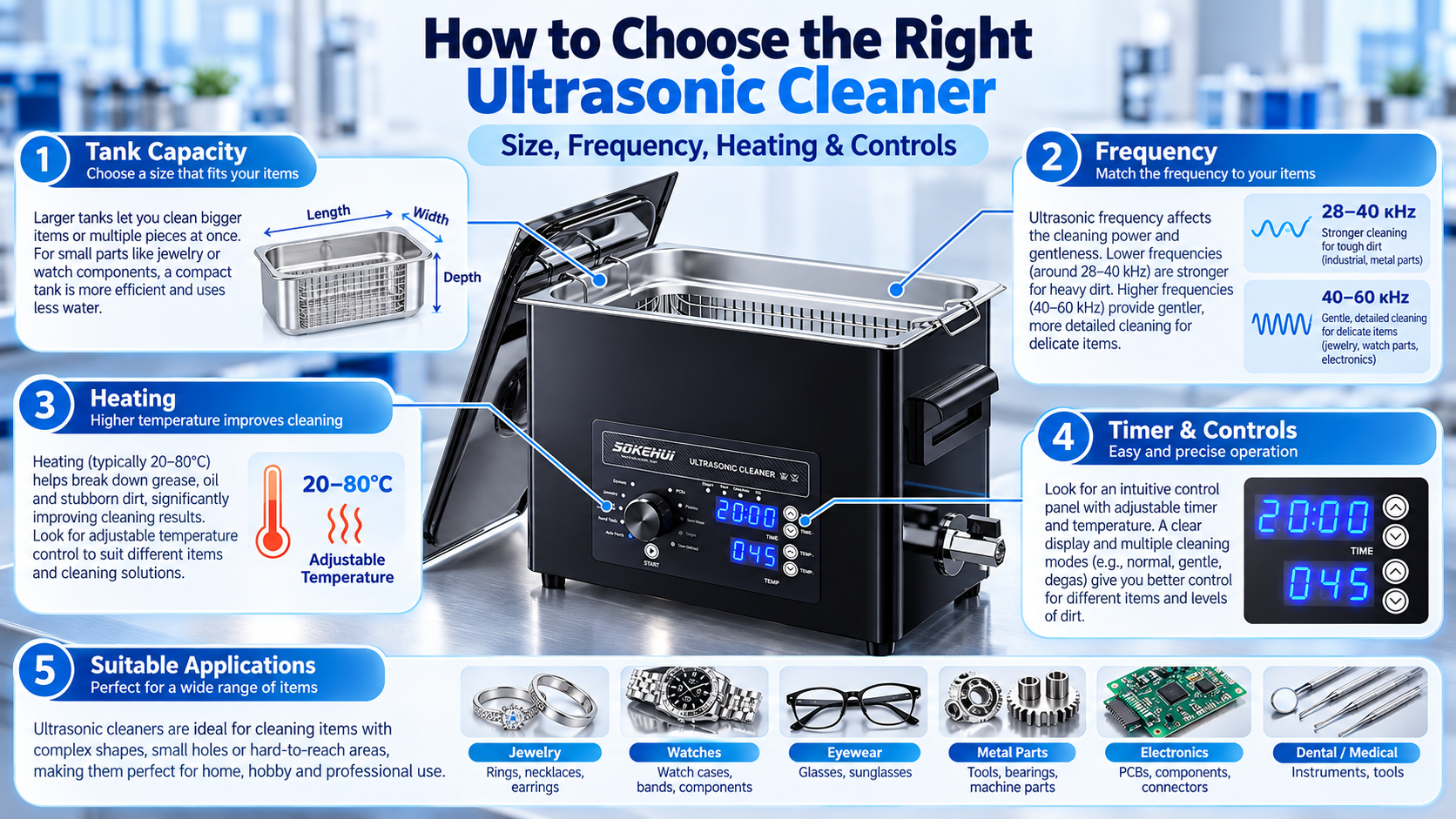
The item should fit comfortably inside the usable tank area. Consider the actual length, width, height, basket, and working space rather than choosing a machine by nominal capacity alone.
2. Consider Cleaning Frequency
Ultrasonic frequency affects the character of the cavitation process. The most appropriate frequency depends on the material, contamination, part geometry, and cleaning objective.
3. Choose a Compatible Cleaning Solution
The solution should match both the contaminant and the material being cleaned. Water alone is not necessarily the best choice for every application.
4. Use Appropriate Temperature and Cycle Settings
Heating can be useful for some cleaning processes. Cycle time and temperature should be selected according to the part, contamination, solution, equipment instructions, and desired result.
5. Rinse and Dry When Required
After cleaning, compatible parts may need rinsing and thorough drying. This helps prevent cleaning-solution residue from remaining on the surface.
How to Choose an Ultrasonic Cleaner for Your Application
The best ultrasonic cleaner is not necessarily the largest machine. Start with these five questions:
- What are you cleaning? Jewelry, tools, automotive parts, precision components, or another compatible item?
- What is the largest part? Measure the actual dimensions and consider how the part will sit in the basket.
- What contamination are you removing? Oil, grease, dust, polishing residue, carbon deposits, or another contaminant?
- How often will you use the cleaner? Occasional cleaning and repeated workshop use can have different equipment requirements.
- Which features matter for your process? Consider capacity, frequency, heating, timer, controls, drainage, basket design, and other relevant features.
Explore Ultrasonic Cleaner Options
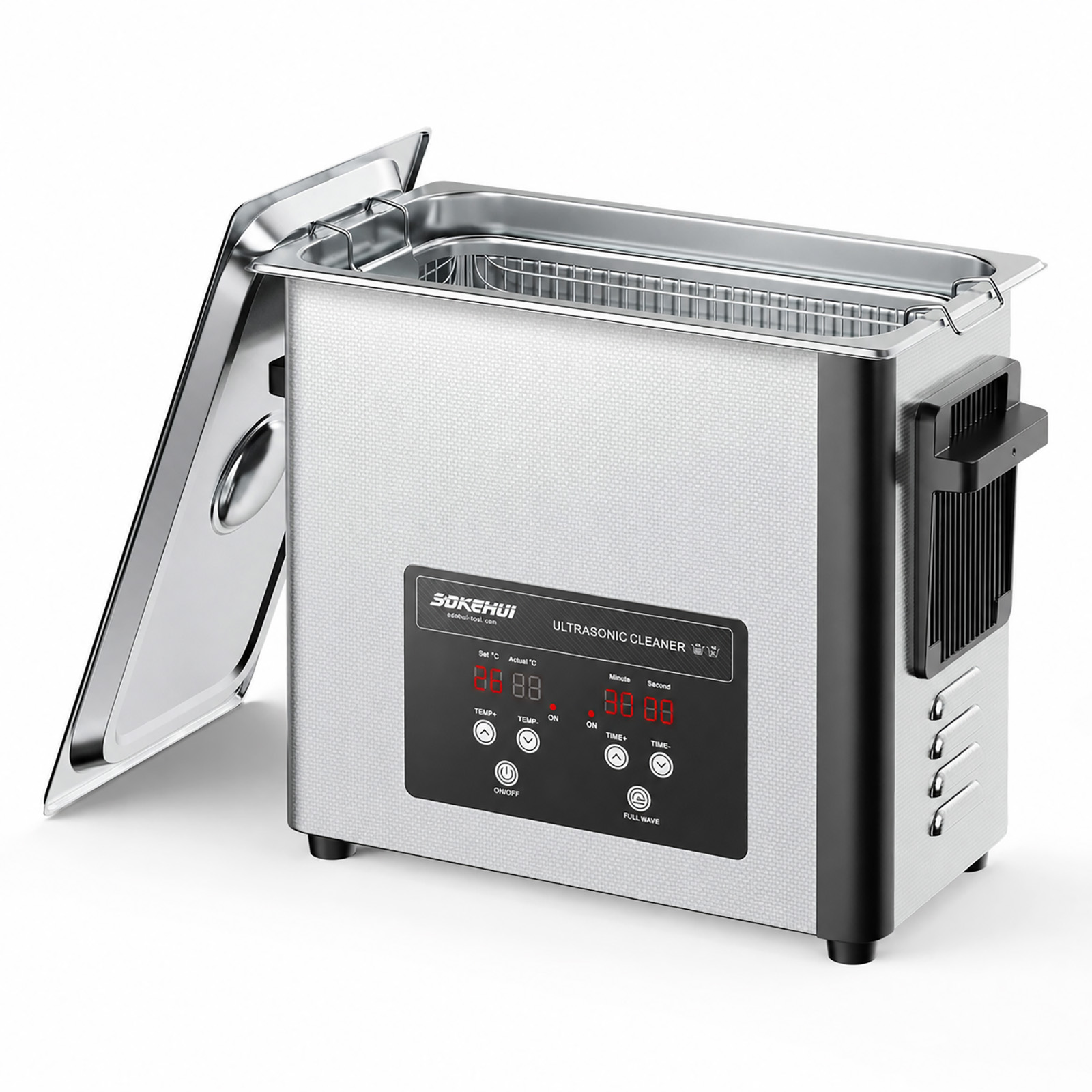
Different cleaning jobs can call for different equipment choices. Explore the SDK HUI TECH collections below and compare the options for your application.

Frequently Asked Questions
Can ultrasonic cleaners clean automotive parts?
Yes, suitable automotive and mechanical components can be cleaned ultrasonically. Verify material, coating, seal, and cleaning-solution compatibility before processing a part.
Can I clean jewelry in an ultrasonic cleaner?
Many suitable metal jewelry pieces can be cleaned ultrasonically, but some gemstones and jewelry constructions are not suitable. Check compatibility first.
Can ultrasonic cleaners clean tools?
Suitable metal tools are a common application, especially when grease and residue collect around grooves, threads, joints, and complex surfaces.
Can ultrasonic cleaning replace manual cleaning?
It can reduce manual scrubbing for many suitable parts, especially those with complex surfaces, but the correct solution, settings, and post-cleaning process remain important.
Is a larger ultrasonic cleaner always better?
No. The machine should match the dimensions, workload, material, contamination, and cleaning process. A larger tank is not automatically the best choice.
Find the Right Ultrasonic Cleaner
Ready to improve your parts-cleaning process? Explore the SDK HUI TECH ultrasonic cleaner collections and compare options for your application.
View Bench View Value View Workshop